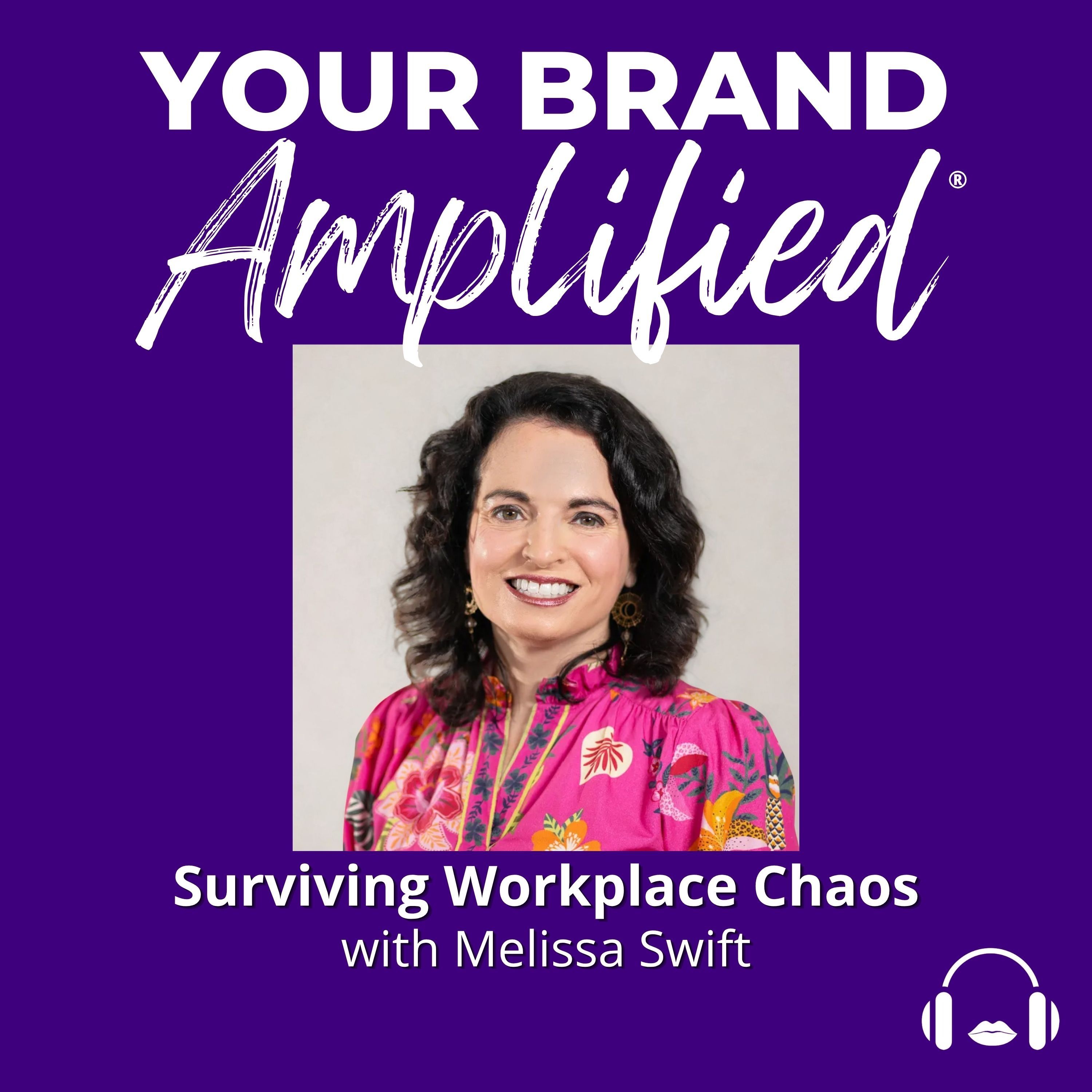
July 31, 2026 · 45 min · Episode 764
Reclaiming Your Power: Surviving Workplace Chaos and Doing Great Work with Melissa Swift
About this episode
Reclaiming Your Power: Surviving Workplace Chaos and Doing Great Work with Melissa Swift
Anika sat down with Melissa Swift, founder and CEO of Anthrome Insight, to tackle the reality of the modern workday: constant interruptions, hyper-emotional environments, and overwhelming chaos. Following the release of her new book, How to Do Great Work in a Fast Changing World, Melissa shares why systemic organizational changes are great, but individuals need actionable survival strategies now. Drawing on research from high-stakes professionals like firefighters and ER doctors, this conversation provides a practical framework for identifying your true strengths, dealing with chaotic colleagues, and recognizing when a job is fundamentally broken.
In This Episode
- The COVID-era breaking point that inspired a shift from organizational strategy to individual empowerment
- Breaking down the "Effectiveness Architecture": Knowledge, Methods, People, and Technology
- The self-checkout paradox: why automating tech actually requires a massive increase in human "soft skills"
- The four trends making us less effective at work, with a deep dive into navigating chaos
- Natural chaos (the science of surprises) versus the frustration of people operating chaotically
- The Muppet Theory of Management: knowing when to deploy your "Order Muppets" vs. "Chaos Muppets"
- What corporate America can learn from firefighters about deep tech mastery and acute role clarity
- How organizations inadvertently gaslight employees by hiring them for jobs the company culture actively rejects
- Three concrete steps you can take this week to carve out space and reclaim your sanity
Timestamps
- 00:00 Introduction: Operating effectively in a fast-changing world
- 01:17 Why Melissa's audience demanded a book focused on individual survival strategies
- 02:52 The COVID breaking point and the metaphor of the empty Soviet streetcar
- 04:13 The Effectiveness Architecture: simplifying 30,000 skills into four core pillars
- 06:46 Why technology rollouts fail without the proper "people skills" training
- 09:38 Four trends destroying workplace effectiveness: intensification, emotion, transparency, and chaos
- 11:23 Natural chaos vs. human chaos (and the Muppet theory of team dynamics)
- 14:48 What white-collar workers can learn from the training habits of firefighters
- 19:51 The myth of the "skills gap" and the untapped power of self-directed learners
- 23:55 Identifying your superpower (Knowledge, Methods, People, or Tech) and overcoming stereotypes
- 29:45 Why role clarity is the first casualty of chaos and how to get it back
- 33:50 How to recognize if your job is fundamentally broken or set up to fail
- 39:08 Three actionable steps to reclaim your effectiveness and boundaries this week
- 43:35 Favorite quote: Oscar Wilde on the vital art of brevity
Key Insights & Takeaways
Insight 1: The Effectiveness Architecture Simplifies Work
Instead of getting bogged down in corporate frameworks boasting 30,000 different micro-skills, individual effectiveness boils down to four clear pillars: Knowledge, Methods, People, and Technology. Identifying which pillar is your natural superpower (and which is your weakest link) allows you to partner with complementary colleagues and combat workplace stereotypes.
Insight 2: Automation Requires More "People Skills," Not Less
When companies automate roles (like introducing self-checkout lanes), they often underestimate the human element. The remaining workers suddenly have to act as IT support, security, and customer de-escalation all at once. Rolling out advanced technology—including AI—without training people on the soft skills required to manage the human friction around it is a recipe for burnout.
Insight 3: Not All Chaos is Created Equal
There is "natural chaos" (the inevitable surprises of a shifting economy or supply chain) and there is the unnatural chaos of colleagues operating erratically. You manage natural chaos through scenario planning, but you manage human chaos by building strict boundaries and strategically deploying the right personalities (your organized "Kermits" vs. your adaptable "Animals").
Insight 4: High-Stakes Professionals Prioritize Deep Mastery and Crisp Roles
Unlike corporate workers who switch between dozens of apps a day without truly mastering any, professionals like firefighters are given the time and space to completely master a single new tool before their lives depend on it. Similarly, in an ER or on a fireground, role clarity is acute. In corporate settings, blurred roles masquerade as "collaboration," but they actually drain creativity and cause systemic failure.
Insight 5: Your Job Might Be Fundamentally Broken
Sometimes your lack of effectiveness isn't your fault. If you are hired to be a "change agent" in a company that inherently rejects innovation, or if you are told to "lead through influence" without any actual resources or power, you are fighting gravity. Recognizing when a job is structurally broken is the first step in deciding whether to renegotiate your role or walk away.
Resources & Links Mentioned
How to Do Great Work in a Fast Changing World by Melissa Swift
Work Here Now by Melissa Swift
About Melissa Swift
Melissa Swift is the founder and CEO of Anthrome Insight, a leading organizational effectiveness consultancy. With an extensive background working with large global organizations like Mercer, Korn Ferry, Deloitte, and Capgemini, she is a recognized authority on the future of work and a regular columnist for the MIT Sloan Management Review. She is the author of Work Here Now and her latest release, How to Do Great Work in a Fast Changing World.
Connect with Melissa Swift
Website: Anthrome Insight
LinkedIn: Melissa Swift
YBA was named the top PR podcast in the US by FeedSpot! Feedspot is an RSS Reader that lets you follow your favorite podcasts alongside blogs and news in one place.
Like the show? Leave us a rating or review: https://lovethepodcast.com/67940257010b317cdaa9d857
Send us a Message: https://podcastfeedback.com/67940257010b317cdaa9d857
Check out our Website: https://www.yourbrandamplified.com
Speak to my Delphi Clone: https://www.delphi.ai/amplifywithanika
Hosted by Simplecast, an AdsWizz company. See pcm.adswizz.com for information about our collection and use of personal data for advertising.
Article
Melissa Swift on Doing Great Work Amid Workplace Chaos and Her Four-Pillar Effectiveness Framework
Melissa Swift is founder and CEO of Anthrome Insight and author of Work Here Now and How to Do Great Work in a Fast Changing World. In this episode of Your Brand Amplified, she explains the gap between what workers are expected to achieve and the conditions they're given, what firefighters can teach offices about learning, and how individuals can protect their effectiveness. Her core point: the overload is structural, but with the right strategy you can focus on the work that matters.
What are the four pillars of effectiveness at work?
Swift's framework has four pillars:
- Knowledge: understanding your domain.
- Methods: how you systematically put everything together.
- People skills: communicating, listening and enlisting others without manipulation.
- Technology skills: understanding how systems work, not mastering every new tool.
She wrote the new book for individuals because audiences of Work Here Now, which focused on team and organizational fixes, kept asking for something they could control themselves. Rather than listing thousands of competencies, she identified the categories that have always mattered. Knowing your strongest and weakest pillar helps you partner with colleagues who complement you.
What can offices learn from firefighters about learning?
Give people time to learn. Swift's research into high-stakes professions like firefighting and emergency medicine shows a sharp contrast with corporate culture. Firefighters may spend two days studying a new rope before trusting their lives to it, while companies allow little time for technology adoption and expect instant proficiency. Roles are clear on a fireground or in an ER; in offices, blurred roles often pass as "collaboration."
When skill gaps appear, workers usually get blamed. Swift disagrees: most people are self-directed learners, and organizations are responsible for making time and space to learn. She adds that automation often increases the need for people skills, because the workers who remain handle the human friction around new technology.
How should you handle chaos at work?
Match the strategy to the kind of chaos. Natural chaos, such as shifting markets, calls for scenario planning and adaptability. Chaos created by people calls for boundaries and role clarity. Her Muppets metaphor: sometimes you need Kermit's steady order, and sometimes Animal's comfort with creative disruption.
Some jobs simply don't work, whether resources fall short or the organization rejects the work it hired someone to do, like an innovation role in a culture that resists innovation. The most committed people often suffer longest. Swift suggests concentric circles: talk with your manager, explore other internal roles, then consider an external move, without reckless leaps.
Her steps for this week: prioritize what is vital, create space by cutting unnecessary meetings and clarify how work actually flows. Know your real job, not the narrow version from hiring day, and protect that scope to escape the "highway hypnosis" of constant distraction.
Key takeaways
- Assess yourself on knowledge, methods, people skills and technology skills, and partner to cover gaps.
- Organizations, not workers, are responsible for creating time to learn new tools.
- Use scenario planning for external chaos and boundaries for people-made chaos.
- If a job is structurally broken, work outward: manager, internal moves, then external options.
- Start by prioritizing what is vital, cutting unnecessary meetings and clarifying workflows.
Listen to Anika Jackson's full conversation with Melissa Swift on Your Brand Amplified.
Get booked on podcasts
We book you on 5 to 10 high-quality podcasts every month.
Podcast Guest BookingStart your own show
Coaching and a peer network for experts building a branded podcast.
Your Branded Podcast™